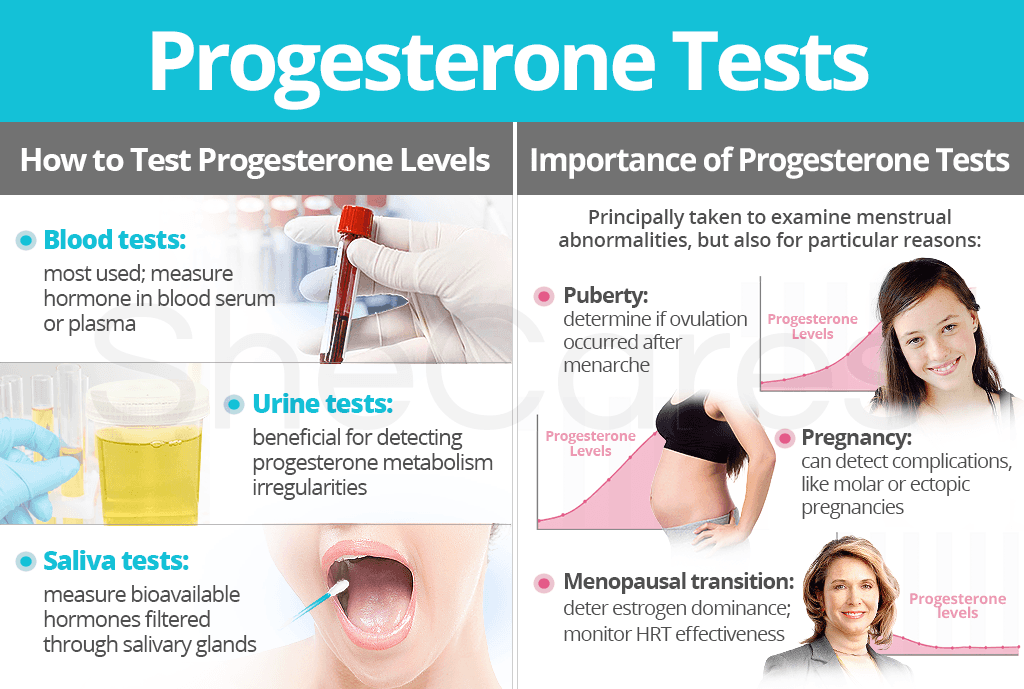
In general, progesterone tests are essential for diagnosing a variety of hormonal disorders and assisting in monitoring overall health. Imbalances not only result in irregular periods, but also countless, unwanted symptoms such as hair loss, weight gain, depression, anxiety, and more.
Continue reading to discover the most essential information concerning common and advanced progesterone tests as well as why these tests are important to pursue throughout various life stages.
Common Progesterone Tests
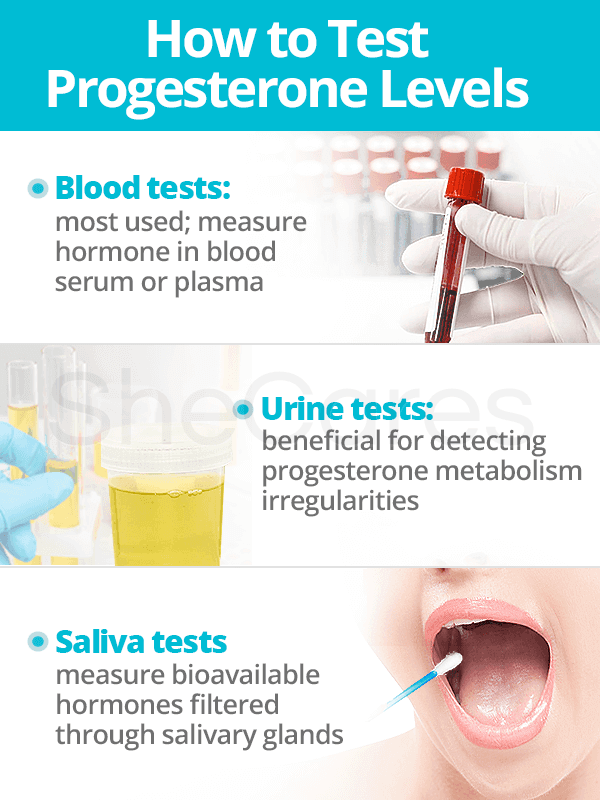
Blood test
Most doctors choose to test women's progesterone levels in blood serum or plasma. Either test displays the total amount of the hormone present for women in various reproductive stages:
Menstruating women. With a 28-day menstrual cycle, progesterone levels are generally tested three weeks (21 days) in, allowing for its peak five to nine days after ovulation. With irregular cycles, doctors may request regular testing until menstruation arrives in an attempt to identify when (or if) ovulation occurred. During this stage, normal blood levels range from 0.1 to 25 ng/mL.1
Pregnant women. Women who are pregnant have a consistent rise in progesterone until childbirth. Therefore, taking a progesterone blood test periodically throughout a pregnancy can help observe placenta and fetal health. Results vary, but blood levels of the hormone during pregnancy fluctuate between 10 to 290 ng/mL.1
Postmenopausal women. The majority of progesterone production halts with the cessation of ovarian reproductive functions. As such, for those who have passed their childbearing years, progesterone levels usually consistently range from 0.1 to 1 ng/mL.2
Keep in mind that there are some hazards involved with taking progesterone blood tests. These include excessive bleeding, fainting, infection, or the occurrence of hematomas, which is when blood collects outside of a blood vessel.
Urine test
Because urine tests measure what has been excreted, or metabolized, they can be a useful indicator of irregularities in hormone metabolism. It is recommended to follow the same testing schedule as one would be blood testing in order to evade significant discrepancies in the results.
Still, urine tests are less often used by healthcare professionals and criticized for not being an accurate measure of bioavailable hormones, which are those that exert biological responses within the body. Hormone levels in urine can also be influenced by factors such as drug use, kidney function, and diet.
Advanced Progesterone Tests
Saliva test
Saliva tests are frequently considered more accurate than blood serum, blood plasma, or urine tests because they measure the bioavailable hormones that are filtered through the salivary glands and enter saliva.
Conversely, some critics consider saliva testing to be inappropriate in cases where the woman is on hormone therapy, during which levels can increase drastically, evoking inaccurate results. Also, self-test results should be discussed with a doctor to properly diagnose any underlying medical conditions.
Why are Progesterone Tests Important?
Depending on the reproductive stage, in general, progesterone tests are used to help look into a variety of menstrual abnormalities, such as infertility, unusual spotting, and amenorrhea, among others.

During puberty, progesterone concentrations in a prepubescent girl do not change until after menarche. Therefore, testing for progesterone levels when a young girl is going through puberty can help determine if and when she has ovulated after her first period.
During pregnancy, a progesterone test can help suggest the presence of a molar pregnancy, ectopic pregnancy, or miscarriage, which can be accompanied by symptoms of abdominal pain and spotting. To maintain a pregnancy, women may be put on progesterone replacement therapy and monitored accordingly.
During the menopausal transition, testing for excreted progesterone levels after menopause helps women deter the onset of estrogen dominance and judge the effectiveness of hormone therapy treatment. Keeping stable, postmenopausal hormonal levels helps allay various symptoms, such as vaginal dryness, hot flashes, mood swings, and more.
Once a progesterone imbalance has been detected, there are many treatment options women can pursue to amend it. Continue reading to learn more about progesterone medications and the variety of choices available to get back on track to optimal hormonal health.
Sources
- American Association for Clinical Chemistry. (2018). Progesterone. Retrieved October 25, 2019, from https://labtestsonline.org/tests/progesterone
- Brinton, R.D. et al. (2008). Progesterone receptors: form and function in brain. Frontiers in Neuroendocrinology, 29(2), 313-339. doi: 10.1016/j.yfrne.2008.02.001
- Women in Balance Institute: National University of Natural Medicine. (2017). Hormone Testing & Diagnostic Resources | Unraveling the Mystery of Hormone Testing. Retrieved January 2, 2018, from https://womeninbalance.org/physician-resources/hormone-testing-diagnostic-resources/ | https://womeninbalance.org/2012/10/26/unraveling-the-mystery-of-hormone-testing/
Footnotes:
- University of Rochester Medical Center: Healthy Encyclopedia. (n.d.). Progesterone. Retrieved October 25, 2019, from https://www.urmc.rochester.edu/encyclopedia/content.aspx?ContentTypeID=167&ContentID=progesterone
- UCSF Health. (2015). Serum progesterone. Retrieved October 28, 2019, from https://www.ucsfhealth.org/tests/003714.html