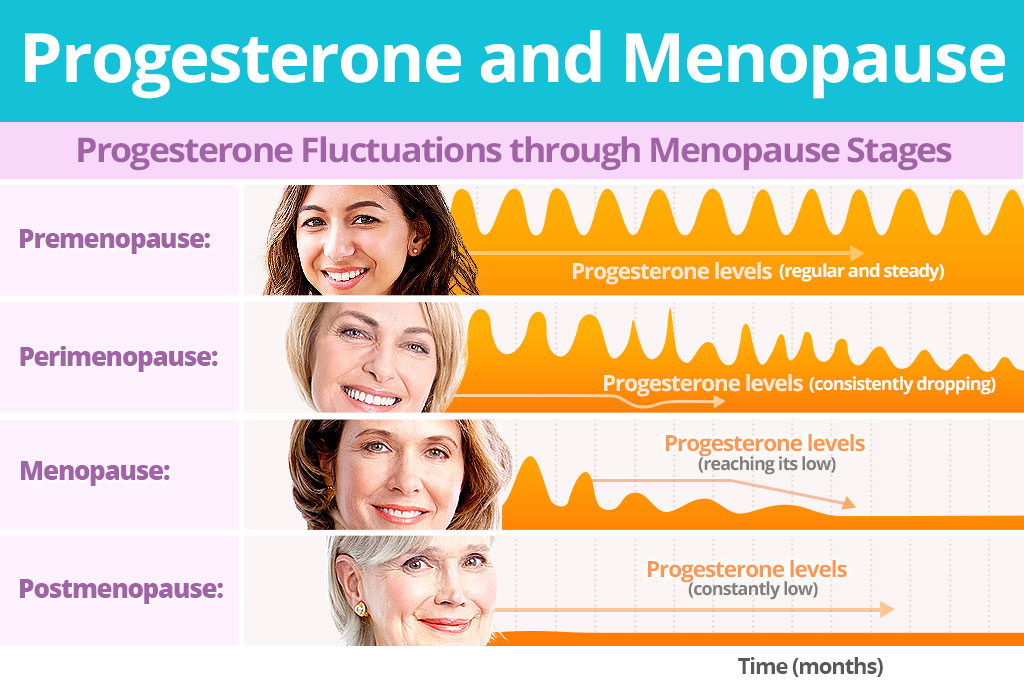
While an estrogen imbalance can evoke a variety of symptoms, the same can be said for progesterone, which can, inversely, be smothered by estrogen's effects. Continue reading to learn more about the fluctuations of progesterone during menopause stages and the symptoms that can be evoked throughout the years.
Fluctuations of Progesterone during Menopausal Stages
Women pass through four reproductive stages throughout their lives, starting with puberty and ending with postmenopause.

Progesterone during Premenopause
Premenopause spans from menarche through the initiation of perimenopause. Over the next 30+ years, the consistent fluctuation of hormones guides the menstrual cycle on a monthly basis.
Accordingly, progesterone production and natural hormone fluctuations are predictable in the absence of major health conditions, surgeries, and other lifestyle factors that may disrupt endocrine system functions.
Progesterone during Menopause (Perimenopause)
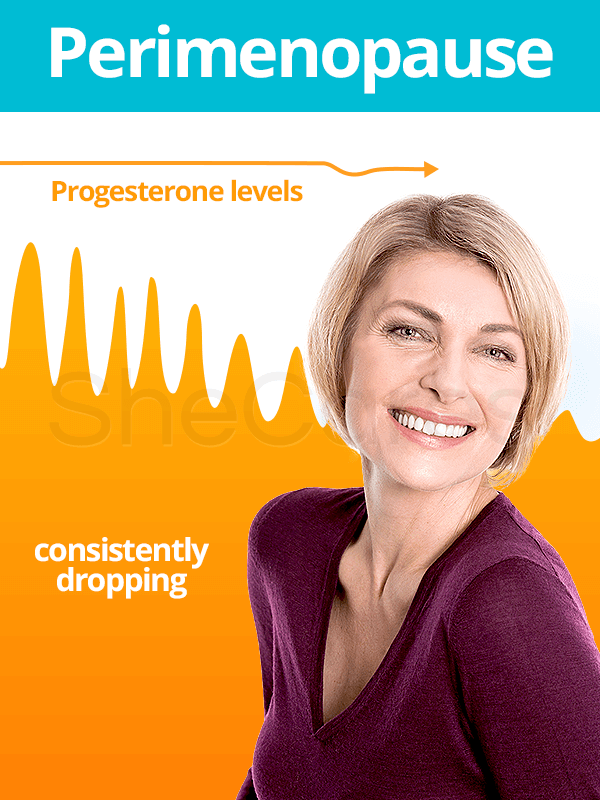
Colloquially referred to as menopause, perimenopause usually begins two to ten years before the onset of menopause. It officially starts with irregular periods and ends a year after a woman's last menses.
Progesterone during perimenopause will fluctuate erratically, and there will be a natural decline in ovarian production as anovulatory cycles ensue.
A lack of progesterone will lead to a variety of different symptoms, especially if estrogen production goes unchecked. These symptoms may continue far into postmenopause if not handled properly early on.
Progesterone and Menopause
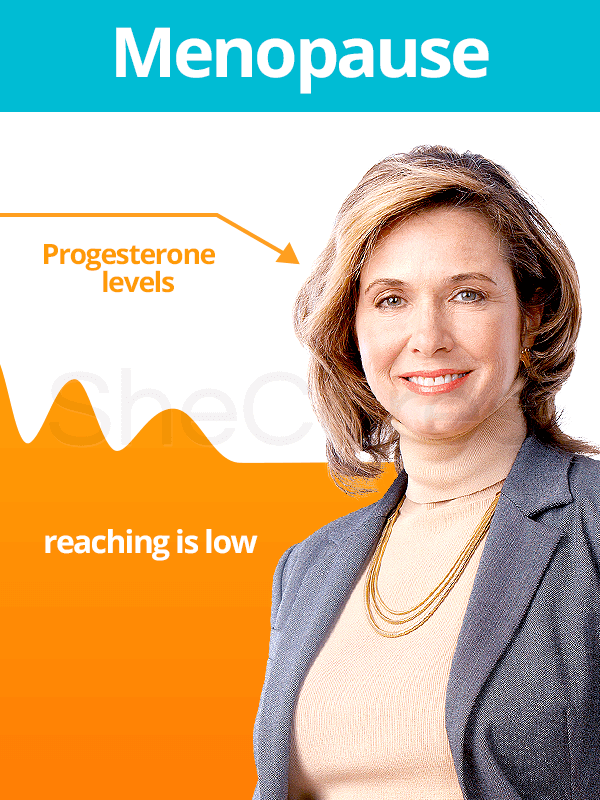
Menopause is a point in time when a woman has gone 12 consecutive months without a menstrual period. On average, the North American woman will reach natural menopause around age 51.
With this end to fertile years, progesterone levels have been decreasing and fluctuating until the menstrual cycle no longer continues.
As such, it is not uncommon for women to experience a variety of menopause symptoms that can be attributed to these hormonal fluctuations.
Progesterone after Menopause (Postmenopause)
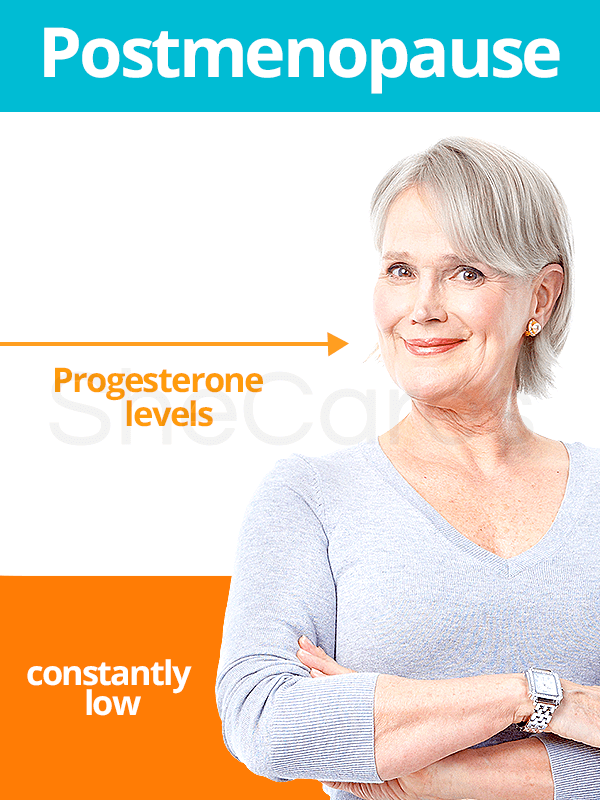
For decades prior to postmenopause, the ovaries produced a substantial amount progesterone within the corpus luteum, a temporary structure created after ovulation.
With the cessation of ovulation, progesterone blood levels drop dramatically. Subsequent production happens by converting endogenous steroid precursors to progesterone in the adrenal glands.
This lack of circulating postmenopausal progesterone triggers a new range of health risks aside from already burdening symptoms.
Progesterone and Menopause Symptoms
Progesterone fluctuations can bring about various signs and symptoms, which can often be mistakenly attributed to other health conditions.
During Premenopause
During a woman's regular monthly period, she may encounter a range of symptoms that result from premenstrual syndrome (PMS), caused by low levels of progesterone in an estrogen dominant state.
These symptoms normally occur during the luteal phase of the menstrual cycle if sufficient amounts of progesterone are not secreted from the corpus luteum. Common PMS symptoms include:
- Acne
- Mood swings
- Irritability
- Fatigue
- Swollen or tender breasts
- Difficulty concentrating
- Trouble sleeping
- Constipation or diarrhea
- Anxiety
- Food cravings
- Headaches
- Bloating
- Aching joints
- Muscle pain or tension
During Perimenopause and Menopause
Into perimenopause, women will experience a range of PMS symptoms as well as menopause symptoms. Symptoms of low progesterone during the menopausal transition include, but are not limited to:
- Hot flashes
- Mood swings
- Vaginal dryness and itching
- Disturbed sleep
- Irritability
- Fatigue
- Memory lapses
- Difficulty concentrating
- Anxiety
- Headaches
- Depression
- Hair loss or thinning
- Sleep disorders
- Loss of libido
- Dizziness
- Weight gain
- Incontinence
- Bloating
- Rapid heart rate
- Aching joints
- Increased muscle tension
- Itchy or crawly skin
- Tingling extremities
During Postmenopause
Consistently lower levels of progesterone after menopause bring additional concerns for women past their fertile years. Also, health risks during this time are more serious and can be long-term. Some of these health conditions include:
- Allergies
- Asthma
- Arthritis
- Thyroid dysfunction
- Urinary tract infections
- Fibrocystic breasts
- Fibroids
- Magnesium deficiency
- Breast or uterine cancer
- Endometrial hyperplasia or cancer
- Cardiovascular disease
Understanding the importance of progesterone during and after reproductive years is a crucial step in comprehending how to keep oneself in hormonal balance.
Nevertheless, having low progesterone levels or high progesterone levels brings about its own list of distinct signs and symptoms, all causing distress for women.
In efforts to begin or continue living a well-balanced life, discover more about increasing progesterone levels.
Sources
- Harvard Health Publications. (2017). Perimenopause: Rocky road to menopause. Retrieved July 17, 2019, from http://www.health.harvard.edu/womens-health/perimenopause-rocky-road-to-menopause
- Johnson, L. R. (Ed.). (2003). Essential Medical Physiology. USA: Elsevier. Available from Google Books.
- The North American Menopause Society. (2010). Changes in Hormone Levels | Menopause FAQs: Understanding the Symptoms. Retrieved July 17, 2019, from https://www.menopause.org/for-women/sexual-health-menopause-online/changes-at-midlife/changes-in-hormone-levels | http://www.menopause.org/for-women/expert-answers-to-frequently-asked-questions-about-menopause/menopause-faqs-understanding-the-symptoms
- Tagliaferri, M. et al. (Eds.). (2006). The New Menopause Book. New York: Penguin Group. Available from Google Books.
- University of Iowa Health Care. (2018). Menopause: Frequently asked questions. Retrieved July 17, 2019, from https://uihc.org/health-topics/menopause-frequently-asked-questions