Often times, having low progesterone levels will provoke symptoms wrongly attributed to other underlying causes. As long as the hormonal imbalance goes untreated, symptoms will persist, continually worsening.
Continue reading to learn more about low progesterone and what causes unnatural fluctuations, including hormonal and lifestyle-related triggers, for an improved standard of living.
About Low Progesterone Levels
During the menstrual cycle, progesterone is lowest during the follicular phase. After ovulation, levels increase rapidly as the corpus luteum, which is formed from the ruptured follicle, produces it. Throughout the luteal phase, progesterone levels will remain elevated, above those of estrogen, until the next cycle.
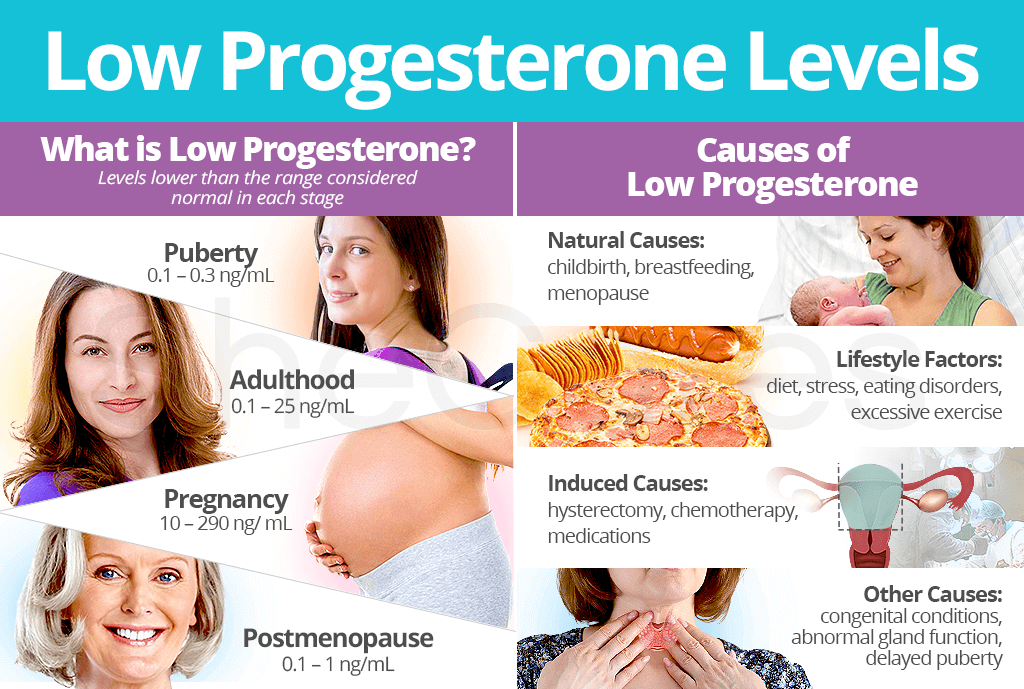
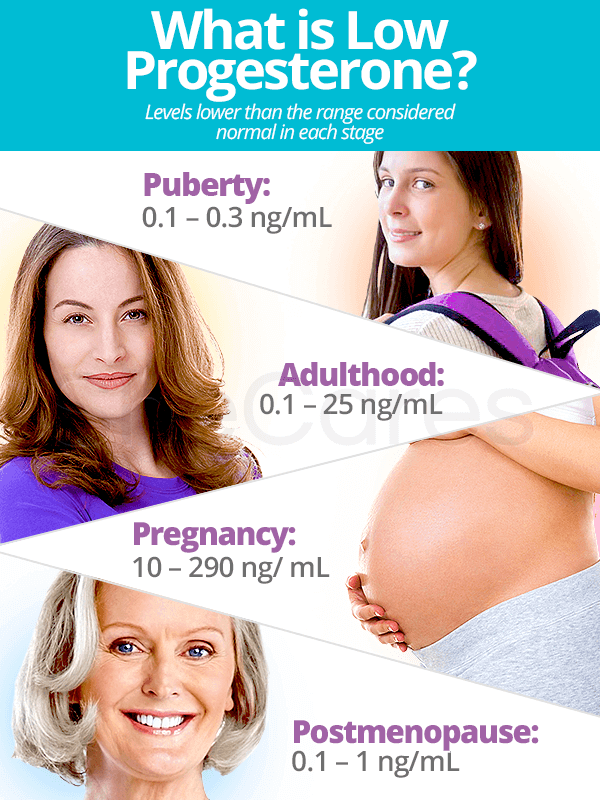
In adulthood, it is typical for monthly progesterone levels to range from 0.1 - 25 ng/mL, contingent upon age and stage in the menstrual cycle.1 However, many will experience irregular drops at some point in their lifetime, and these descents can be caused by a variety of factors.
Causes of Low Progesterone Levels
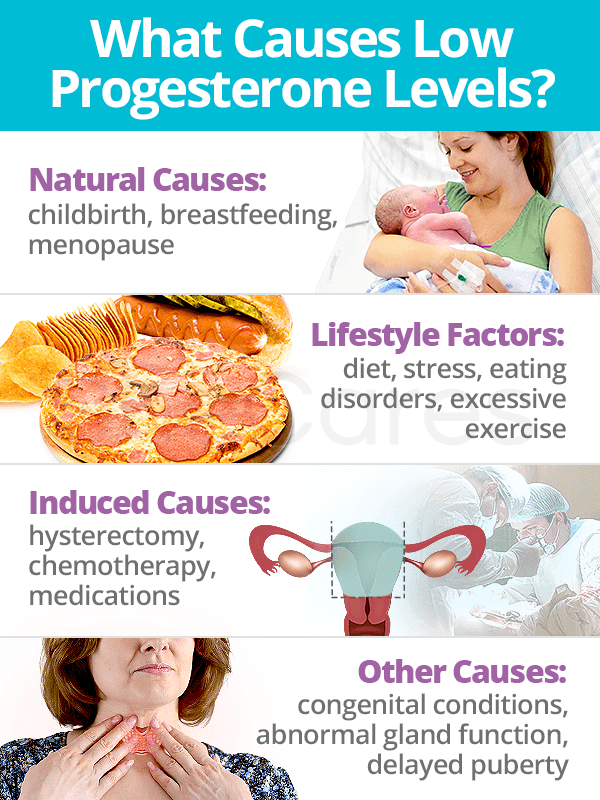
Causes of low progesterone are divided into four categories: natural causes, lifestyle factors, induced causes, and other causes.
Natural Causes of Low Progesterone Levels
During Adulthood (20s to 40s)
Low levels of progesterone can occur during normal adulthood, often due to childbirth and breastfeeding.
Directly after childbirth, blood levels of progesterone fall, allowing production of high density milk for the newborn. Within two to three days postpartum, milk will begin to flow sufficiently enough for continual breastfeeding.
When breastfeeding, progesterone levels will naturally be low due to the causal relationship between high prolactin, the hormone that controls lactation, and the absence of ovarian activity. With no menstrual cycle, there is no possibility of ovulation, during which the majority of progesterone is produced.
As long as a woman is breastfeeding, progesterone levels are suppressed, which normally acts as a natural form of birth control to help space out pregnancies. However, postpartum hormonal levels vary from woman to woman, and getting pregnant while breastfeeding is still possible. As such, it should not be relied upon as a sole form of contraception.
During this time, a lack of progesterone may evoke symptoms often associated with menopause, such as vaginal dryness, loss of libido, fatigue, night sweats, and more.
During Perimenopause and After Menopause (40s on up)
When a woman enters the menopausal transition, irregular periods ensue. Women may skip periods, have longer or shorter menses, or have anovulatory cycles. These abnormalities may affect ovulation, further hindering progesterone production.
This decline in progesterone levels with possible estrogen dominance may provoke a host of symptoms, including mental fogginess, night sweats, hot flashes, mood swings, anxiety, and weight gain, among others.
Undergoing hormone therapy by using progesterone products may provide the hormonal boost needed. Postmenopausal women may also choose more natural progesterone treatments in the form of herbal supplements that nourish endocrine glands.
Lifestyle Factors that Cause Low Progesterone Levels
Several lifestyle factors can also cause low progesterone levels. Many of them are associated with factors that inhibit ovulation. These factors include:
Diet. Fatty foods have a powerful effect on hormonal activity in the body. High-fat diets have been linked to high estrogen levels, causing progesterone levels to be shadowed in the wake of the hormonal imbalance.
Stress. Extreme stress levels can disturb hypothalamic function, which fuels and controls activities of other glands. Over time, increased production of cortisol to deal with the chronic-stress situation interferes with endocrine system functions, leading to a progesterone deficiency.
Eating disorders. Anorexia nervosa, bulimia nervosa, and binge eating all encourage stress hormone production. As aforementioned, stress hormones disrupt reproductive hormone production. Furthermore, having excessively low or high body weight can halt ovulation and subsequent progesterone production.
Extreme exercise. Strenuous exercising can also cause a woman to have insufficient body fat, leading to secondary amenorrhea. Exercise-induced secondary amenorrhea causes the body to believe it is in a “starvation state,” thereby pausing bodily operations not considered essential for survival, such as reproductive system functions.
Induced Causes of Low Progesterone Levels
Various procedures and treatments can induce lower progesterone levels, such as hysterectomies, radiation therapies, and certain medications.
A hysterectomy is the surgical removal of the uterus. It may be performed with or without oopherectomy, which is the removal of the ovaries. When both the ovaries and the uterus are removed, decreased progesterone levels can ensue as ovarian hormone production stops.
Research studies suggest that menopause occurs nearly four years earlier in women who have underwent a hysterectomy with oopherectomy.
Another cause of low progesterone levels is chemotherapy or radiation therapy treatments. Loss of ovarian functions may begin as soon as two to three weeks into treatment and be permanent. Ovarian performance depends upon the type of chemotherapy received and whether they were irradiated.
Furthermore, use of certain medications for various health conditions can cause amenorrhea, thus halting progesterone production from ovulation onward. These medications include antipsychotics, antidepressants, blood pressure drugs, and even allergy medications.
Other Causes for Low Progesterone Levels
In addition, the following conditions can each prompt low progesterone levels in women:
Congenital conditions. Genetic predispositions, such as Turner syndrome and androgen insensitivity syndrome, can cause a woman to have lower progesterone levels, many times due to amenorrhea.
Abnormal gland function. Thyroid disorders and pituitary gland diseases and tumors have both been found to provoke lowered progesterone levels in women by inducing menstrual irregularities, including amenorrhea.
Delayed puberty. Delayed pubertal development can evoke many health conditions, improper ovarian development being one of them.
Overall, there are various natural, induced, and other factors that can lead to low progesterone levels for women of all ages.
Therefore, correcting a hormonal imbalance is advised before conditions become severe complications with a progesterone deficiency. Continue reading to learn more about the signs and symptoms of low progesterone.
Sources
- The American Congress of Obstetricians and Gynecologists. (2011). Perimenopausal Bleeding and Bleeding After Menopause. Retrieved October 27, 2017, from https://www.acog.org/Patients/FAQs/Perimenopausal-Bleeding-and-Bleeding-After-Menopause
- Cox, L. & Liu, J.H. (2014). Primary ovarian insufficiency: an update. International Journal of Women's Health, 6, 235-243. doi: 10.2147/IJWH.S37636
- Davey, J.D. & Dzugan, S. (2017). The Cholesterol Puzzle: The Hormone Connection. England: Matador. Available from Google Books.
- Deshpande, H. et al. (2012). Complete Androgen Insensitivity Syndrome. Journal of Obstetrics & Gynecology of India, 62(Suppl 1), 75-77. doi: 10.1007/s13224-013-0382-6
- Harvard Health Publishing. (2006). What are bioidentical hormones? Retrieved November 3, 2017, from https://www.health.harvard.edu/womens-health/what-are-bioidentical-hormones
- Mayo Clinic. (2014). Amenorrhea: Causes. Retrieved October 31, 2017, from https://www.mayoclinic.org/diseases-conditions/amenorrhea/basics/causes/con-20031561
- Moorman, P.G. et al. (2011). Effect of Hysterectomy With Ovarian Preservation on Ovarian Function. Obstetrics & Gynecology, 118(6), 1271-1279. doi: 10.1097/AOG.0b013e318236fd12
- The Physicians Committee. (n.d.). Fat and Hormonal Effects. Retrieved November 2, 2017, from https://www.pcrm.org/health/cancer-resources/diet-cancer/nutrition/fat-and-hormonal-effects
- Raffelock, D. et al. (2002). A Natural Guide to Pregnancy and Postpartum Health. New York: Avery. Available from Google Books.
- Society for Endocrinology. (2014). Eating disorders and hormones | Turner syndrome. Retrieved October 31, 2017, from http://www.yourhormones.info/topical-issues/eating-disorders-and-hormones/ | http://www.yourhormones.info/endocrine-conditions/turner-syndrome/
- University of Southern California. (2009). 5 Things You Need to Know About Exercise-Induced Amenorrhea. Retrieved October 31, 2017, from http://uscfertility.org/5-things-need-know-exercise-induced-amenorrhea/
Footnotes:
- University of Rochester Medical Center: Healthy Encyclopedia. (n.d.). Progesterone.Retrieved October 25, 2017, from https://www.urmc.rochester.edu/encyclopedia/content.aspx?ContentTypeID=167&ContentID=progesterone