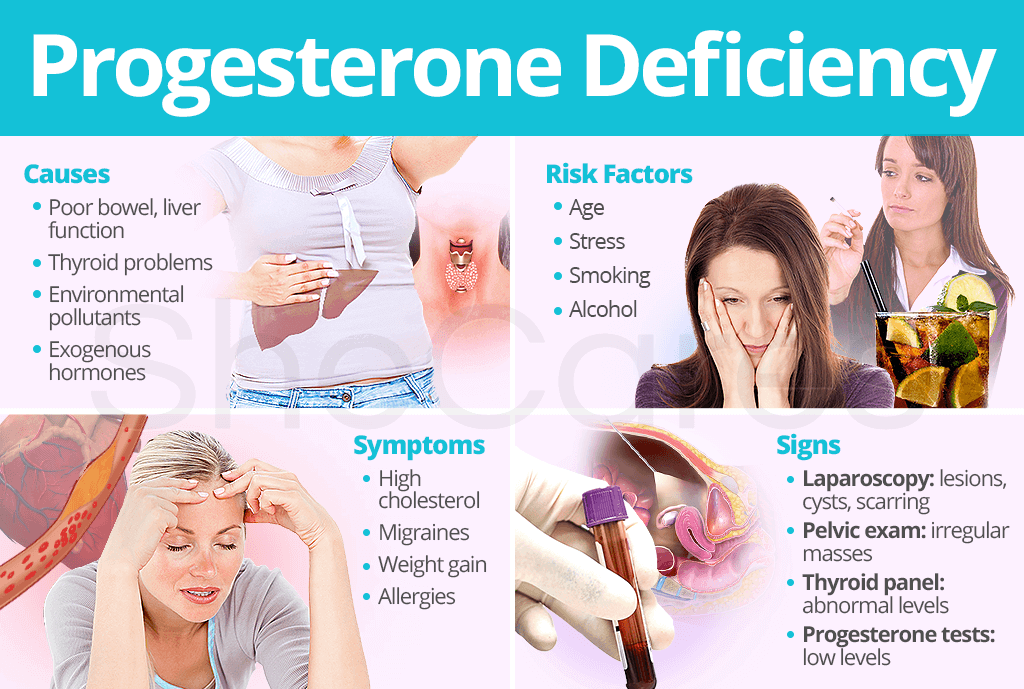
When there is a surplus of estrogen in comparison to progesterone, the condition that results is known as progesterone deficiency. Due to the consistent absence of progesterone in the body, this condition carries with it its own list of causes, risk factors, signs, and symptoms.
Continue reading to learn and understand more about this life-threatening hormonal imbalance.
What Is Progesterone Deficiency?
A progesterone deficiency is not solely defined as low progesterone levels, but when a woman has constantly low progesterone levels due to the presence of high estrogen levels. A progesterone deficiency is continual and mid- to long-term. Whereas, low progesterone levels are just temporary.
This is problematic due to the hormone's crucial role in the female reproductive system and body as a whole. Progesterone is known as a progestational hormone as it prepares the uterus for a fertilized ovum and maintains pregnancy. The hormone also works in conjunction with estrogen to promote the health of various other body systems, such as the cardiovascular, immune, and more.
Causes of Progesterone Deficiency
Because the endocrine system is affected by a range of factors, identifying the cause of progesterone deficiency from symptoms exhibited is key in moving forward with treatment.
Primary causes of progesterone deficiency aside from the transition into menopause include:
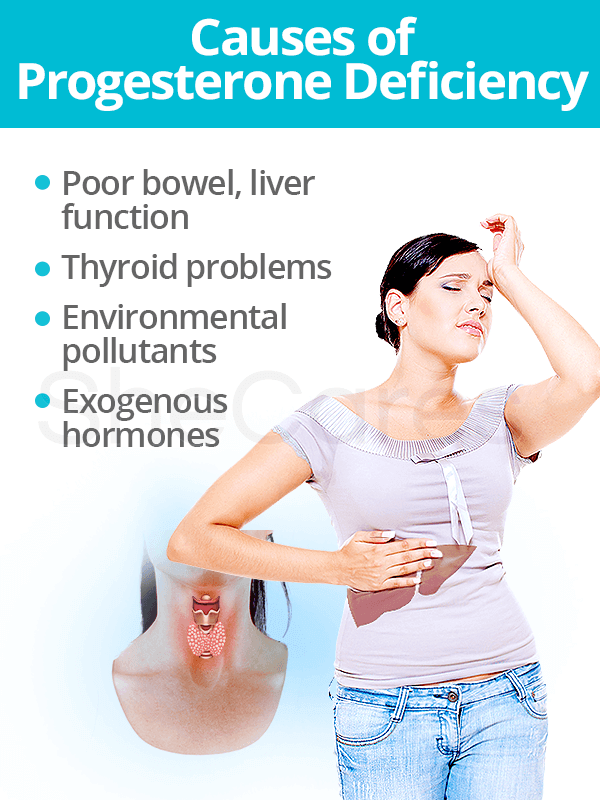
Poor bowel and liver function. Estrogens converted to inactive metabolites in the liver are eliminated through the bowels in urine or feces. If this system is not functioning correctly, it can trigger high estrogen levels or reabsorption of estrogen back into the body, throwing hormonal balance off kilter.
Thyroid problems. When there are excessive amounts of estrogen in proportion to progesterone, thyroid action is inhibited. Moreover, hypothyroidism negatively affects clearance of estrogen from the body, further contributing to the never-ending cycle.
Environmental pollutants. Non-biodegradable, endocrine-disrupting heavy metals - mercury, arsenic, and lead - and hormonally active xenoestrogens modify endocrine system functions and cause endogenous estrogen levels to rise. These pollutants are found in many places, such as in car exhaust; plastics (BPA); petroleum-based household products; commercial meats; and more.
Exogenous hormones. Consuming birth control pills and prescription medications may elicit progesterone deficiency by encouraging high estrogen levels. The by-products of these foreign drugs cannot be properly broken down and removed from the body. This condition is especially prevalent among those taking HRT.
Risk Factors of Progesterone Deficiency
Moreover, there are a variety of characteristics that put women at greater risk of having a progesterone deficiency.
- Health risk factors. The odds of having a progesterone deficiency may increase with the following traits:
- Age. When menstrual cycles officially halt with menopause, so does the majority of progesterone production since ovulation no longer occurs. During these times, estrogen goes unopposed.
- Obesity. A large percentage of overweight and obese women struggle with hormonal imbalances due to battling with excess insulin, high estrogen, and an underactive thyroid.
- Behavioral risk factors. Progesterone deficiency is linked to various behaviors, including:
- Stress. Progesterone production is subdued, and estrogen dominance occurs when a woman is under high stress because stress leads to an overproduction of cortisol in the body. Cortisol is made from progesterone during stressful times.
- Cigarette smoking. Researchers have discovered that heavy smokers had lower luteal-phase progesterone metabolite levels compared to nonsmokers.1 Remember that the luteal phase of the menstrual cycle is when the most progesterone is produced from the corpus luteum.
- Poor diet. Consistently low levels of progesterone can be triggered by an unhealthy diet that is low in fiber and high in trans-fatty acids; sugar/ processed foods; and commercial poultry and beef that have been supplemented with estrogen-like hormones.
- Alcohol. Research has shown that variations in prolactin levels that are associated with alcohol added to luteal phase defects, which were noticed in social drinkers and those who are dependent on alcohol.2 High prolactin can disrupt ovulation or cause irregular periods, leading to a progesterone-deficient state.
Progesterone Deficiency Symptoms
Difficulty concentrating, mood swings, cramping, and irregular periods are some of the “normal” symptoms associated with having low progesterone levels.
In fact, many progesterone deficiency symptoms are similar to those of low progesterone levels, just more pressing and usually continuous.
The critical symptoms of having a progesterone deficiency include:
- High cholesterol levels
- Memory loss
- Depression
- Hirsutism
- Male-patterned baldness
- Intensified migraines
- Weight gain
- Autoimmune disorders, such as allergies
- And more
Complications of Progesterone Deficiency
When progesterone deficiency symptoms accumulate over time without proper management or treatment, they become complications. The following are a few medical concerns paired with their observable side effects for easier recognition:
- Endometriosis
- Excessive menstrual bleeding
- Painful periods (dysmenorrhea)
- Pain with bowel movements or urination
- Pain during intercourse (dyspareunia)
- Nipple discharge (other than breast milk)
- Uterine cancer
- Unusual vaginal bleeding, spotting, or discharge
- Difficulty or pain when urinating or with bowel movements (or with blood in both)
- Pain during sexual intercourse
- Pain or feeling of pressure in pelvis, lower abdomen, back, or legs
- Thyroid dysfunction (hypothyroidism)
- Increased cold sensitivity
- Constipation
- Dry skin
- Muscle weakness, aches, tenderness, and stiffness
- Thinning hair
- Gallbladder problems
- Pain in upper right section of abdomen (may last for days)
- Nausea or vomiting
- Fever or chills
- Light-colored stools or dark urine
The aforementioned complications can evolve in the wake of estrogen dominance, too.
Signs of Progesterone Deficiency
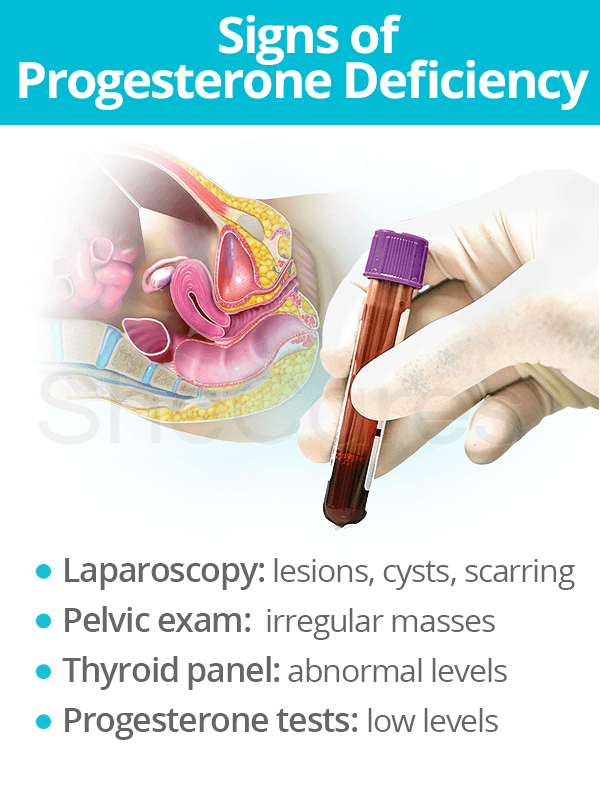
When a doctor identifies symptoms related to a progesterone deficiency, the following test results will be gauged in order to officially diagnose the imbalance:
- Transvaginal ultrasound showing uterine masses, fibroids, or multiple ovarian cysts
- Positive endometrial biopsy or dilation and curettage (D&C) results
- Laparoscopy showing endometriosis lesions, cysts, adhesions, and scarring
- Pelvic examination done by a physician finding firm, irregular pelvic masses
- Ultrasound or HIDA scan confirming presence of gallstones or abnormal features of gallbladder
- Thyroid panel showing abnormal thyroxine or TSH levels
- Progesterone tests (blood, saliva, or urine tests) showing low levels for extended period of time
All in all, progesterone deficiency in the shadow of overpowering estrogen can turn into a severe problem if left untreated. Thankfully, there are methods to handle the imbalance before it worsens. Continue reading to learn more about increasing progesterone levels to get back on track to everlasting hormonal health.
Sources
- Canadian Cancer Society. (n.d.). Symptoms of uterine cancer | Diagnosis of uterine cancer. Retrieved October 24, 2019, from http://www.cancer.ca/en/cancer-information/cancer-type/uterine/signs-and-symptoms/?region=on | http://www.cancer.ca/en/cancer-information/cancer-type/uterine/diagnosis/?region=on
- Diamanti-Kandarakis, E. et al. (2009). Endocrine-Disrupting Chemicals: An Endocrine Society Scientific Statement. Endocrine Reviews, 30(4), 293-342. doi: 10.1210/er.2009-0002
- John Hopkins Medicine. (n.d.). Gallbladder Disease. Retrieved October 24, 2019, from https://www.hopkinsmedicine.org/health/conditions-and-diseases/gallbladder-disease
- Khattar, D. et al. (2015). Correlating Estrogen Levels and Cognitive Functions in Regularly Menstruating Females of Reproductive Age Group and Post Menopausal Women of North India. Journal of Family and Reproductive Health, 9(2), 83-88. Retrieved October 24, 2019, from https://www.ncbi.nlm.nih.gov/pmc/articles/PMC4500819/
- Kohlstadt, I. (Ed.). (2012). Advancing Medicine with Food and Nutrients, Second Edition. Florida: CRC Press. Available from Google Books.
- National Institute of Aging. (2017). What is Menopause? Retrieved October 24, 2019, from https://www.nia.nih.gov/health/what-menopause
- The North American Menopause Society. (2010). Changes in Hormone Levels. Retrieved October 24, 2019, from https://www.menopause.org/for-women/sexual-health-menopause-online/changes-at-midlife/changes-in-hormone-levels
- Prevention Health Books. (1996). Prevention's Healing with Vitamins. New York: Holtzbrink Publishers. Available from Google Books.
- Simpson, K.R. (2009). The Women's Guide to Thyroid Health. California: New Harbinger Publications, Inc. Available from Google Books.
- Wellbery, C. (1999). Diagnosis and Treatment of Endometriosis. American Family Physician, 60(6), 1753-1762. Retrieved October 24, 2019, from http://www.aafp.org/afp/1999/1015/p1753.html
Footnotes:
- Windham, G.C. et al. (2005). Cigarette Smoking and Effects on Hormone Function in Premenopausal Women. Environmental Health Perspectives, 113(10), 1285-1290. doi: 10.1289/ehp.7899
- Pfaff, D.W. et al. (Eds.). (2017). Hormones, Brain, and Behavior: Third Edition. United Kingdom: Elsevier. Available from Google Books.