There are hundreds of hormones and hormone-like substances controlling every bodily function in the human body.1 As such, when the finely orchestrated hormonal patterns are out of tune, an imbalance can occur, bringing with it a manifestation of symptoms that can easily ruin one's daily life.
Find out symptoms of high hormone levels in women below so that you can confidently put the next foot forward in seeking treatment for optimal relief.
Symptoms of High Hormones in Women
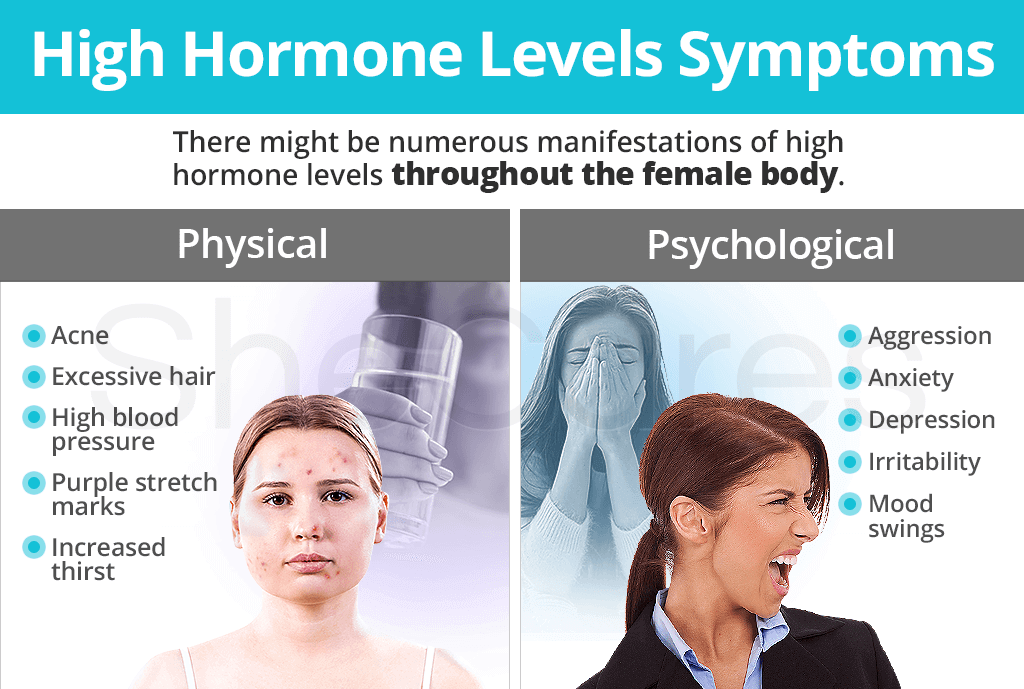
High hormone symptoms are divided into physical and psychological, and they can consist of the following:
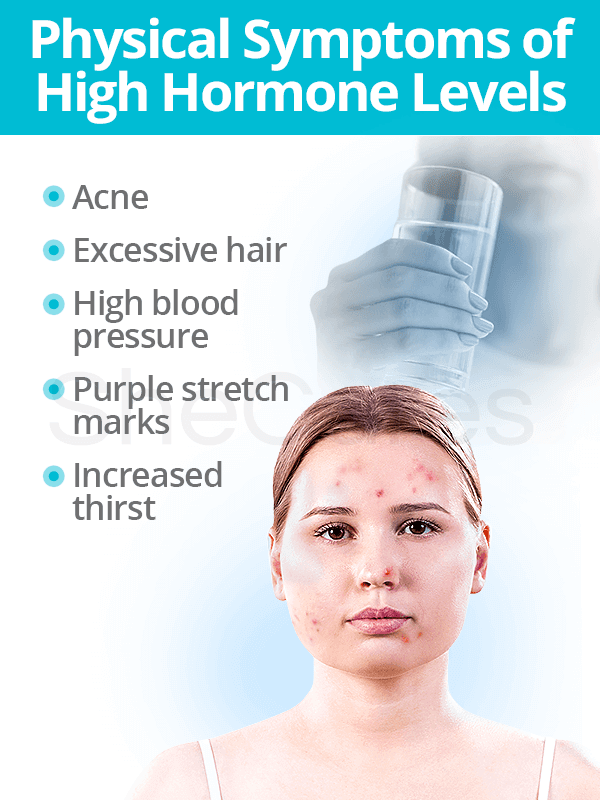
Physical symptoms
- Bloating
- Breast tenderness
- Irregular periods
- Acne
- Excessive hair (hirsutism)
- Weight gain
- Flushed or round face
- Female-pattern hair loss or thinning
- High blood pressure
- Increased frequency of urination
- Increased thirst
- Purple stretch marks
- Loss of libido
- Enlarged clitoris
- Changes in breast size
- Voice changes
- Increased muscle mass
- Infertility
- Oily skin
- Brown and velvety skin patches (acanthosis nigricans)
- Vision changes
Psychological symptoms
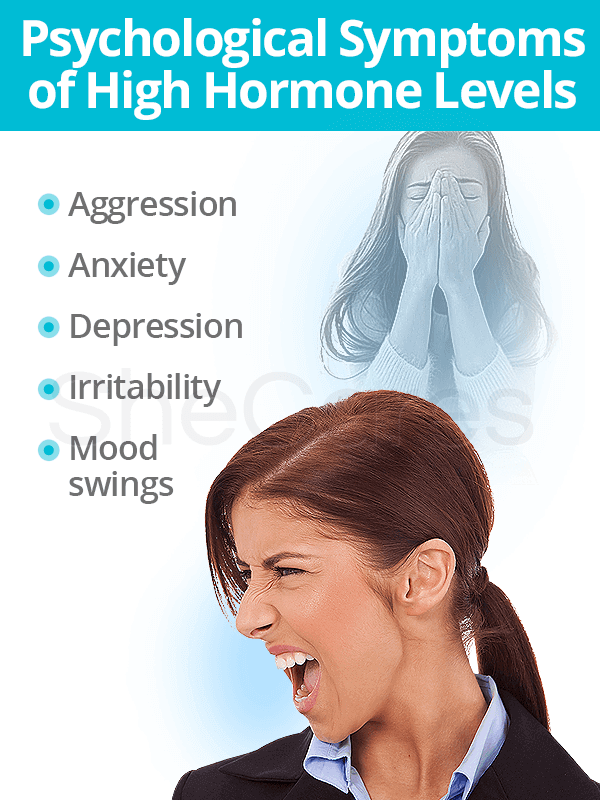
- Aggression
- Anxiety
- Depression
- Irritability
- Mood swings
If women find themselves struggling with any unusual symptoms, they should consult their doctor as only he or she will be able to run appropriate diagnostic testing. Also, it is important to keep in mind that these high hormone symptoms can be suggestive of other health problems and diseases.
Luckily, there are a wide diversity of treatment options available for women who suffer from hormonal imbalance, including high hormone levels. Read all about viable hormonal imbalance treatments to finally enjoy the tranquility of a symptom-free life by clicking on the previous link.
Sources
- Cleveland Clinic. (n.d.). Sexual Hormone Disorders: Descriptions. Retrieved December 17, 2019, from https://my.clevelandclinic.org/health/diseases/17464-sexual-hormone-disorders-descriptions
- Healthy Women. (2018). Signs of High Testosterone in Women. Retrieved December 17, 2019, from https://www.healthywomen.org/content/article/signs-high-testosterone-women
- National Institute of Diabetes and Digestive and Kidney Diseases. (2018). Insulin Resistance & Prediabetes. Retrieved December 17, 2019, from https://www.niddk.nih.gov/health-information/diabetes/overview/what-is-diabetes/prediabetes-insulin-resistance
- National University of Natural Medicine: Women in Balance Institute. (n.d.). Do You Have a Hormone Imbalance? Retrieved December 17, 2019, from https://womeninbalance.org/seventh-woman/do-you-have-a-hormone-imbalance/
- The North American Menopause Society. (n.d.). Changes in Hormone Levels. Retrieved December 17, 2019, from https://www.menopause.org/for-women/sexual-health-menopause-online/changes-at-midlife/changes-in-hormone-levels
- Northwell Health. (2018). 11 unexpected signs of hormonal imbalance. Retrieved December 17, 2019, from https://www.northwell.edu/obstetrics-and-gynecology/fertility/expert-insights/11-unexpected-signs-of-hormonal-imbalance
- Society for Endocrinology. (2019). Cortisol. Retrieved December 17, 2019, from https://www.yourhormones.info/hormones/cortisol/
Footnotes:
- The Pituitary Foundation. (n.d.). Your hormones. Retrieved December 17, 2019, from https://www.pituitary.org.uk/information/hormones/